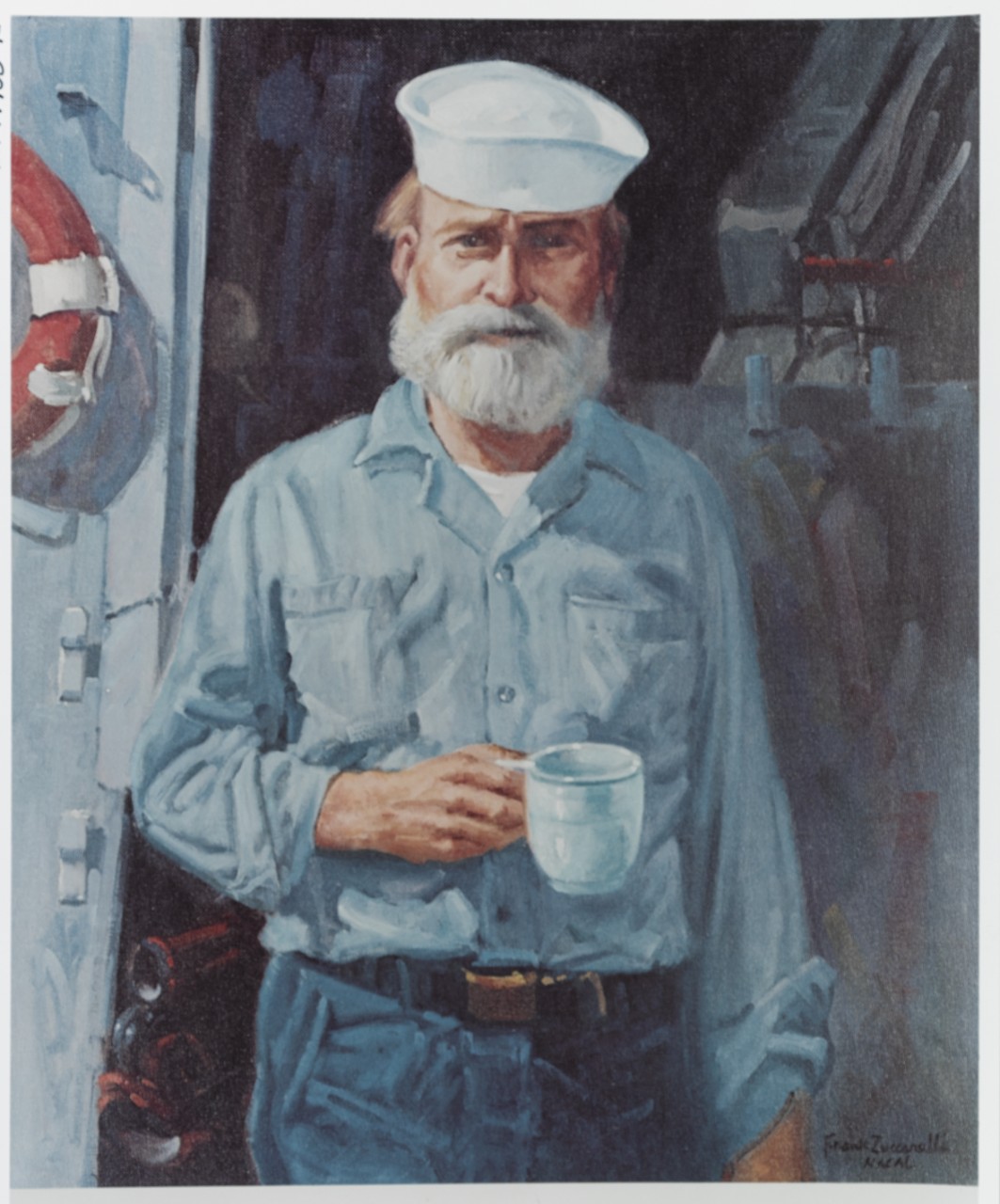
Military life brings with it a distinctive set of phrases that new recruits must quickly learn. In addition to the countless number of acronyms (alphabet soup), there’s a unique jargon that comes with each branch of the service.
After serving 22 years in the U.S. Navy, it took me several years to “talk like a civilian”. After retirement, my wife would remind me that: “it’s not the head, it’s a bathroom” and “our living room doesn’t have an overhead, deck, and bulkhead, it has a ceiling, floor and walls” or “the kitchen floor is cleaned with a mop, not a swab”. It took some time, but eventually I mastered the language of a civilian once again!
In this month’s Fortitude post, I provide a small sampling of U.S. Navy jargon that’s still floating around in my brain (even after being retired from the service for over 27 years). These are the G-Rated jargons – there are so many more “colorful” phrases that we’ll just leave unsaid.
So, if one of your children or grandchildren is planning to join the U.S. Navy, pass on this list of sea-going jargon and they’ll be on their way to be a “full-up-round” when they join the fleet. You got the gouge!
The Gouge: The inside scoop on the way things are said and done aboard ship. Salty Navy veterans pass down “the gouge” to younger sailors.
Bravo Zulu: A U.S. Navy signal sent by combining the Bravo and Zulu nautical signal flags to convey the meaning “Well Done”. The term “BZ” is often provided in written or verbal communications from senior to junior personnel after a job well done.
The Goat Locker: The space aboard ship where Navy Chief Petty Officers (CPOs) meet to relax, plan, share sea stories, and eat together. Historically (in late 1800’s), the goat locker was the area where goats were kept aboard ship under the charge of CPOs.
Pollywog: The Navy has a longstanding maritime tradition to initiate sailors crossing the equator at sea for the first time. Crew members aboard ship who have never crossed the equator are referred to as Pollywogs.
Shellback: A sailor who crossed the equator at sea and was duly initiated during a day-long hazing ritual paying respect to King Neptune. A Golden Shellback crossed the equator where it bisects the International Date Line in the Pacific Ocean. I became a Shellback in 1978 aboard the USS Hunley (AS-31) in the Atlantic Ocean and later crossed the International Date Line in the Pacific as well.
UNREP: Underway Replenishment. Navy ships can stay at sea for extended time periods thanks to this underway evolution called UNREP. During UNREP, combatant ships come alongside supply ships or oilers to take on fuel, food, supplies, parts, ammunition, etc. As conning officer and officer of the deck, I maneuvered the ships I served on many times alongside these supply ships at sea. It’s a nail-biting experience navigating Navy ships close aboard at sea (especially in rough seas). But the fresh fruit and vegetables from those supply ships was so worth it!
Scuttlebutt: Practically, the scuttlebutt is a drinking fountain. But, in reality, scuttlebutt are rumors spread rapidly around the ship as sailors gather at drinking fountains to talk.
Tattoo: Five minutes before Taps (2200 hours) each night at sea, the command, “Tattoo, Tattoo, lights out in five minutes” is passed over the ship’s 1MC announcing system.
Vampire Liberty: The day off a sailor gets after donating a pint of blood.
Sea Lawyer: A sailor who makes eloquent, but completely bogus arguments, in response to disciplinary actions. A sea lawyer is an argumentative, belligerent, know-it-all sailor, who is skillful at using technicalities and half-truths to get out of trouble.
Mess Decks Intelligence: Mostly false rumors that spread from the galley throughout the ship during a deployment usually related to changes in the ship’s schedule (i.e. we’re going home early). Back in 1976 when I was serving aboard the USS Franklin D. Roosevelt (CV-42), we had a collision at sea. Talks of us returning home early from deployment due to damage from the collision spread rapidly around the ship. We ended up finishing the deployment as scheduled – another debunked rumor from mess decks intelligence.
Steel Beach Picnic: A cookout at sea on the fantail or flight deck aboard ship. A time for the crew to unwind after an intense period of high-tempo operations on deployment.
Snipe: Sailors aboard ship that serve in the engineering department (Machinists Mates, Boiler Technicians, Enginemen, Hull Technicians, Electricians, and Gas Turbine Technicians). Snipe is an affectionate term the crew uses for these sailors who work in a hot, dirty, and physically challenging environment for long hours each day.
A-Gang: The Auxiliaries Division of the Engineering Department who are known as “A-Gangers.” They are also called “Fresh Air Snipes.” I served as the Auxiliaries Division Officer aboard the USS Dale (CG-19) in the mid-1980s leading this group of hard working sailors.
Bubblehead: A sailor serving aboard Navy submarines.
Midrats: Short for midnight rations. The fourth meal of the day primarily served to crew members prior to standing the mid-watch (from 0000 to 0400).
Bug Juice: A drink similar to Kool-Aid served during meals aboard ship. Typically orange or red in color but also offered in green and blue. Bug juice is multifaceted as it can also be used to clean decks and remove corrosion from brass fittings.
Red Death: A ground beef and tomato sauce mixture that serves multiple uses. Red Death on a bun is a “sloppy joe“. Red Death on noodles is “spaghetti”. Red Death on a hot dog is a “chili dog”. Red Death on macaroni noodles is “chili mac”. I can still taste that delicious Red Death which, of course, must be paired with a cold glass of Bug Juice.
Dog Watch: The 1600-2000 watch at sea is customarily split into two “dog” watches (1600-1800 and 1800-2000). This allows the watch sections to rotate so crew members aren’t standing the same watches every day and so they can get the evening meal at a reasonable hour.
Geedunk: Candy or the ship’s store that sells candy, chips, or other junk food.
Navy Shower: While at sea, fresh water is made via desalination equipment. Sailors conserve fresh water taking a “Navy Shower” by quickly wetting down, turning the water off, lathering up with soap, and turning the water back on to rinse off. Taking a longer (normal) “Hollywood Shower” is permissible when the ship is in port and connected to pier-side water.
Knee-knockers: A passageway opening through a bulkhead with a hatch (door). The lower steel lip of the opening sits right at shin height. I had many bruises on my shins at sea from these “knee-knockers” especially when the ship was being tossed about in rough seas.
Monkey Watch: A bogus security watch set for new crew members when the ship is passing through the Suez Canal or Straits of Gibraltar. The newbie is dressed in protective gear carrying a pole. When the ship transits the straits or canal, the crew member’s mission is to look for monkeys trying to jump aboard the ship. Seasoned crew members enjoy a laugh watching the new sailors run back and forth across the ship responding to fake monkey sightings.
Ring Knocker: A commissioned officer who is a graduate of the U.S. Naval Academy. The term “ring-knocker” originated from the practice of graduates tapping their class rings on hard surfaces to make a distinctive knocking sound, which served to identify themselves as USNA graduates.
John Wayne: A can opener supplied with Combat Rations (C-Rations). I used the John Wayne at General Quarters aboard the USS Franklin D. Roosevelt (CV-42) when at battle stations during chow time to open cans of food.
Oscar: A buoyant dummy used during man-overboard drills. Named for the letter “O”, the Oscar flag is flown from the mast during a man-overboard drill. A sailor “nominated for an Oscar” is a troublemaker whom which (tongue in cheek) should be thrown overboard.
Hope you enjoyed this glimpse into the language of life at sea in the U.S. Navy. If you’d like to check out more Navy phrases (there are 100’s of them), visit the Glossary of U.S. Navy Slang HERE. And yes, this online list does contain the more “colorful” jargon.
Attention Navy Vets

Ahoy my fellow Navy Veterans! I respectfully request that you reply in the comment section of this post with your favorite U.S. Navy terms or phrases that I did not cover. And please keep them G-rated. This is a family friendly blog – ha ha! GO NAVY!
NOTES
- Featured Image: Naval History and Heritage Command. Old Salt of the Sixth Fleet. Accessed from https://www.history.navy.mil/our-collections/photography/numerical-list-of-images/nhhc-series/nh-series/NH-97000/NH-97953-KN.html on September 3, 2024.
Discover more from Fortitude
Subscribe to get the latest posts sent to your email.
 Fortitude
Thanks Dale, I enjoyed that!Sent from my iPhone
LikeLike
Great stuff Dale. Made me giggle multiple times.
LikeLiked by 1 person